Weather Conditions: Weather Forecast
Water Conditions: Current Flows
Hatches, Insects, Other dietary options for fish: Hatch Chart
- Hatches: Tricos, Midges, Caddis, PMD
- Insects: Sowbugs, Leeches, Worms
- Other: Minnow, Crawdads
Fish Activity:
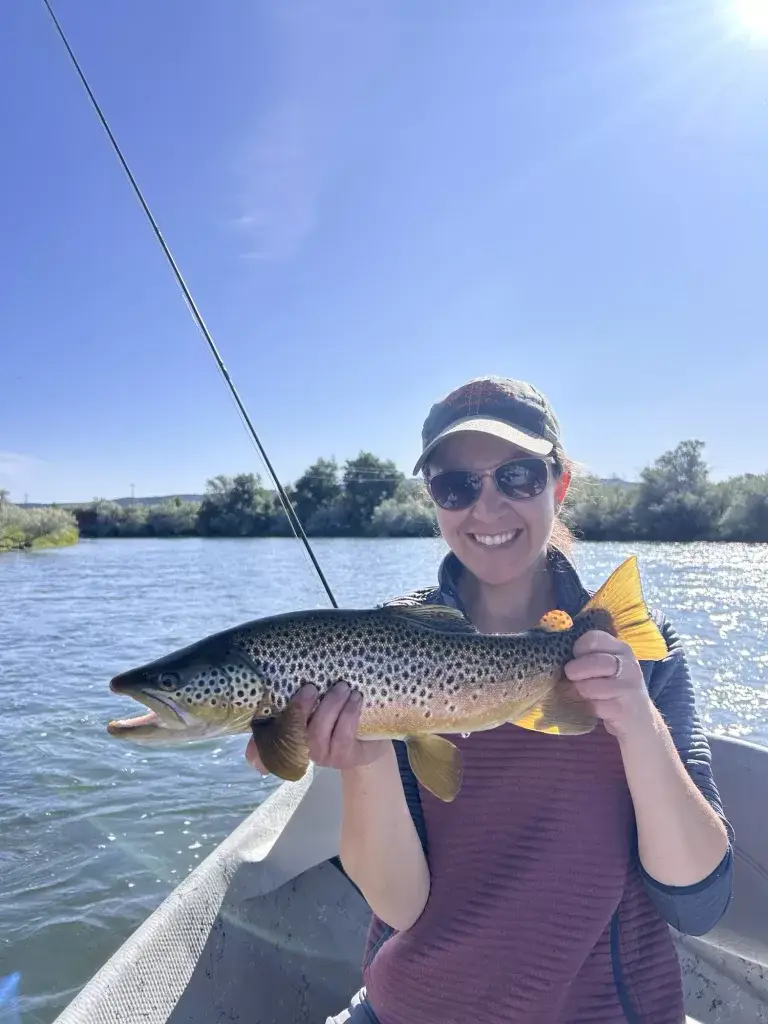
Fish are in full summer mode. They’re actively feeding in fast water and large back eddies. For the best dry fly opportunities, focus on soft, shady water near Russian olive trees. Fish can still be found in deeper runs, but moss can make those spots tough to fish. Target fast runs and shallow, grassy areas—especially where crawdads are present.
Flies:
- Tricos – Rusty Quill Body, Trico Spent, Drowned Tricos, Rusty Comparadun, Mole Fly
- Midges: Black Beauty, Mercury Midge, Zebra Midge, Manhattan Midge, Mayhem Midge, Blood Midges
- Sowbugs: Soft Hackle Hot Head, UV Sow, Carpet Bug, Gut Sack Sow Bugs, Walt’s Worm, Tailwater sow Bugs
- Caddis: Elk Hair, Goddard Caddis, Catastrophic Caddis, Graphic Caddis, Caddie Shack
- Pale Morning Dun – Flashback pheasant tail, nest fly, Olive Manhattan, Olive RS2
- Other: San Juan Worm, WireWorms, Squirmy Worms, Pine Squirrel Leech, Black Wooly Bugger, Goldie, Rusty Trombone, Muddler Minnows, Clouser Crawdad, Tan Zirdles,
Catches and Success Rates:
With the current high-pressure system, fishing has been a bit slower. Most anglers are targeting the same types of water, which adds to the challenge. On an average day, you’re hoping for 7–9 quality fish. Moss is also a factor, and more experienced anglers are finding better success—they know how to manage the moss and get their flies back in the water quickly. Many of the runs are “one and done,” so if your flies are fouled with moss, you’re likely to miss your shot in that spot.
Local Regulations and Updates: 2025 Current Fishing Regulations
General Fishing Tips: Fish have spread out and can be found in just about any fishy-looking water. We recommend focusing on nymphing in the deeper, classic runs where fish are likely holding. For sections with consistent current and structure, streamers are producing well, especially during low-light periods. Hopper-dropper setups are a great option for faster, shallower stretches where fish are looking up but still keying in on subsurface bugs. If possible, rig up a couple of different setups in advance so you can quickly adapt to changing water types throughout the day. Flexibility is key to staying into the fish.
Crowd and Access Information: The Bighorn River is buzzing with activity right now. With the warm weather, plenty of people are getting outside to enjoy the water — from kayakers and tubers to paddle boarders and fishing boats. We’re also seeing an uptick in travel traffic as more folks make their way to Yellowstone. Boat traffic has steadily increased over the past few years, and this season is shaping up to be the busiest we’ve seen in a while. If you’re looking to avoid the crowds, try mixing up your float times, exploring different stretches of river, or seeking out wade-friendly areas. A little creativity can go a long way toward finding solitude and better fishing.
Future Predictions: Looking ahead on the Bighorn, expect the river to stay busy as summer traffic continues, especially with more travelers heading toward Yellowstone. The floating moss will likely stick around through mid-November, so anglers should be prepared to manage it when setting drifts and cleaning lines. On the bright side, as water temps warm and flows settle, fish will begin to key in on terrestrials. We’re already seeing early signs of hopper interest, and the bite should only get better in the coming weeks. Stay patient, stay mobile, and don’t be afraid to throw some foam!