
Winter fly fishing in Wyoming delivers a rare combination of solitude, technical challenge, and exceptional trout fishing. In particular, the Bighorn River near Thermopolis remains a premier cold-season destination thanks to consistent flows and healthy trout populations. However, while winter conditions can produce outstanding results, they also demand careful preparation and a disciplined approach to staying warm.
Fortunately, success in cold weather is not about owning a single high-priced piece of gear. Instead, the key to a productive and comfortable day on the water is a well-planned layering system, combined with strategic attention to hands, feet, and core temperature. When done correctly, anglers can fish longer, stay focused, and take full advantage of prime winter conditions.
As a Wyoming fly fishing guide service based on the Bighorn River, Bighorn Drifters has helped anglers safely and comfortably fish through every season. Over time, we have learned that cold-weather efficiency directly impacts success—especially when trout are lethargic and opportunities are limited. Therefore, understanding how to regulate body heat is just as important as fly selection or presentation.
Below is a comprehensive guide designed to help you conquer the cold, extend your time on the river, and make the most of winter fly fishing in Wyoming—whether you are fishing on your own or planning a guided winter trip on the Bighorn River.
Other Great Resources
Staying Warm and Catching Fish: Matt Reilly’s Winter Fishing Strategies
Start With a Proper Layering System
First and foremost, staying warm while winter fly fishing begins with an effective layering strategy. Rather than relying on bulky outerwear, successful cold-weather anglers focus on regulating body heat through multiple breathable layers.
Begin with a high-quality base layer. Merino wool or synthetic materials are essential because they wick moisture away from the skin while retaining heat. Cotton, on the other hand, should always be avoided, as it traps moisture and accelerates heat loss. Skwala Fishing Gear is quickly becoming one of our favorites, the Thermo 150 Hoody is a great choice for a baselayer. Normally adding two light base layers provides the most comfort. Wearing the Thermo 150 Hoody with another light layer like a 1/4 zip provides more flexablity when sheading layers on bright sunny days.
Next, add an insulating mid-layer. Fleece, lightweight down, or synthetic insulation works well depending on conditions. On the Bighorn River, temperatures can fluctuate throughout the day, so choosing layers that can be easily added or removed is critical. The Skwala Thermo 350 Hoody is a great midweight layer that dries quick if it gets wet, this a piece of clothing that never get left at home.
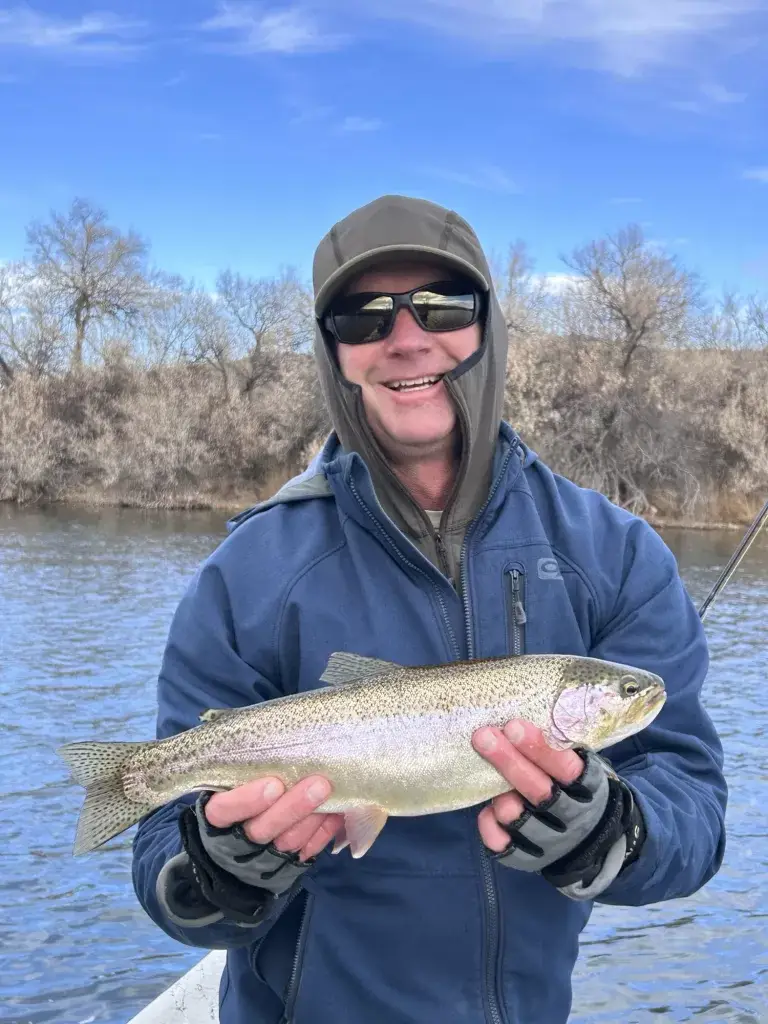
Finally, complete the system with a waterproof and windproof outer shell. A well-fitted wading jacket blocks wind, sheds snow, and keeps spray from soaking inner layers. As experienced Wyoming fly fishing guides, we see many anglers underestimate wind exposure—especially in open river corridors during winter months. Snow pants can be a great layer if you are planning to fish out a boat.
Keep Your Feet Warm and Dry
Equally important, cold feet can quickly end an otherwise productive day. Since you are standing in cold water for extended periods, insulation and circulation are paramount.
Start with wool or thermal wading socks. These provide warmth while still allowing moisture to escape. Additionally, ensure your wading boots are not too tight. Restricted blood flow is one of the most common causes of cold feet during winter fly fishing. If you are only fishing out of the boat and not planning to wade fish, warm hunting boots work better than wader and wading boots.
For extreme conditions, neoprene booties or insulated waders can make a significant difference. On guided winter trips with Bighorn Drifters, we consistently recommend erring on the side of warmth—especially for anglers new to winter fishing on the Bighorn River.
Protect Your Hands Without Sacrificing Dexterity
Hands are often the first body part to suffer in freezing conditions. However, managing warmth while still tying knots and handling flies requires balance.
Layering applies here as well. Fingerless wool gloves provide warmth while allowing line control. When conditions worsen, adding a waterproof shell mitten over your gloves helps trap heat between drifts. Chemical hand warmers are also a reliable backup, particularly during long nymphing sessions. Many anglers wear nitrile gloves during the winter, these gloves help keep the hands dry. While they can provide warmth and keep the hands dry, they also can rip. Key with gloves is having several options in case one pair gets wet. Bring a couple of dry towels during the winter can greatly improve your ability to keep the hands dry.
Furthermore, keeping hands dry is just as important as keeping them warm. Therefore, always carry a spare pair of gloves in a dry bag—an often-overlooked detail that seasoned Wyoming fly fishing guides never skip.
Don’t Overlook Head and Neck Coverage
While many anglers focus on waders and jackets, heat loss from the head and neck is substantial. A fleece or wool beanie paired with a neck gaiter dramatically improves overall warmth. Another good option is a Silk Neck Scarves, Wild West Rags makes some great products and has larger scarves so you can find one that works for you.
In windy canyon sections of the Bighorn River, these small additions often make the difference between fishing comfortably and cutting the day short. As a rule of thumb, if your core stays warm, your hands and feet will perform better as well.
Stay Fueled and Take Smart Breaks
In addition to proper clothing, internal warmth matters. Eating high-energy snacks and staying hydrated helps your body generate heat. Warm drinks carried in a thermos can be especially effective during winter fly fishing days.
Moreover, taking short breaks to move, stretch, or step out of the water improves circulation. Even the most experienced Wyoming fly fishing guides adjust their pace in winter to maintain comfort and focus.
Why Winter Fly Fishing on the Bighorn River Is Worth It
Despite the cold, winter fly fishing offers unique advantages. Crowds are minimal, trout are often concentrated in slower water, and technical presentations can lead to some of the most rewarding fishing of the year.
With proper preparation, anglers can safely enjoy consistent winter opportunities on the Bighorn River. At Bighorn Drifters, we believe winter is one of the most underrated seasons to experience guided fly fishing in Wyoming.
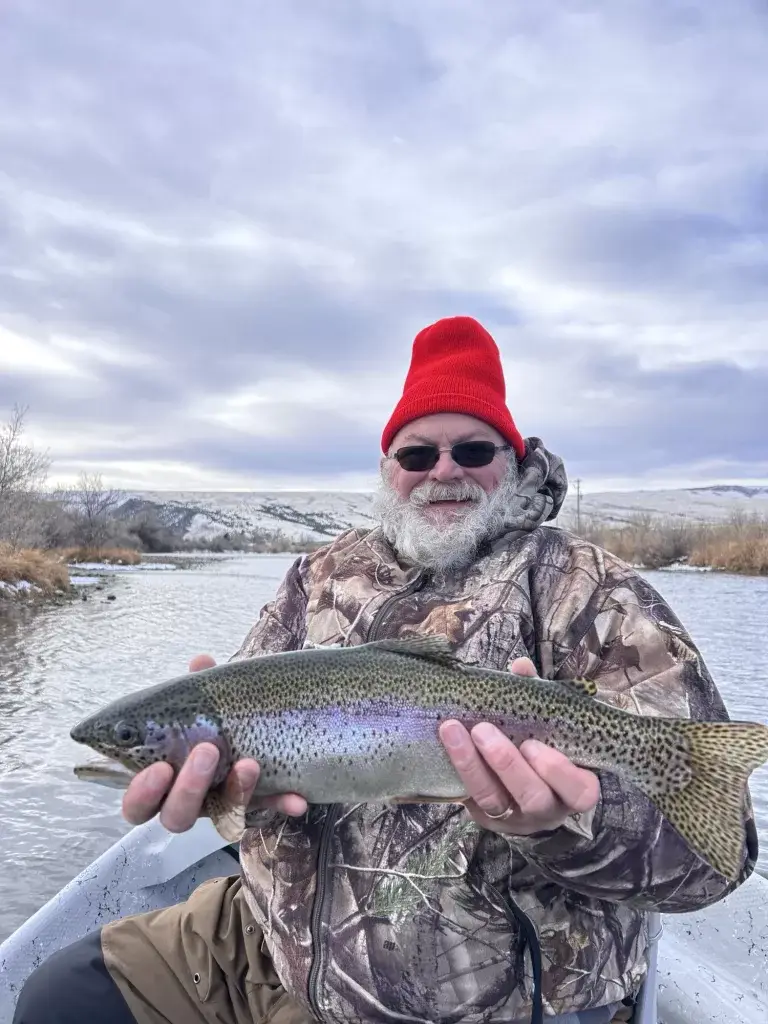
Plan Your Winter Fly Fishing Trip With Bighorn Drifters
If you are ready to experience the solitude and productivity of winter fly fishing, consider booking a guided trip with Bighorn Drifters, a trusted Wyoming fly fishing guide service based on the Bighorn River in Thermopolis.
Our experienced guides provide local knowledge, seasonal strategies, and practical cold-weather expertise to ensure a comfortable and successful day on the water.
Contact Bighorn Drifters today to book your winter fly fishing trip on the Bighorn River and fish confidently, comfortably, and effectively—no matter the season.
Winter Fly Fishing Gear Checklist
To stay comfortable and maximize time on the water, preparation is essential. Below is a proven winter fly fishing gear checklist recommended by the guides at Bighorn Drifters:
Clothing & Layering
- Moisture-wicking base layers (merino wool or synthetic)
- Insulating mid-layer (fleece or lightweight down)
- Waterproof, windproof wading jacket
- Insulated or breathable waders, Snow Pants
- Wool or thermal wading socks
- Insulated wading boots (roomy enough for circulation) or Insulated Hunting Boots
Hands, Head & Extremities
- Fingerless wool gloves
- Nitrile Rubber Gloves (At least two Pair)
- Waterproof shell mittens
- Extra gloves stored in a dry bag
- Wool or fleece beanie
- Neck gaiter, buff, Silk Scarve
- Chemical hand warmers
On-the-Water Essentials
- Polarized sunglasses (low-light friendly)
- Thermos with a warm drink
- High-energy snacks
- Dry bag for spare layers
- Nymphing gloves or stripping gloves (optional)
This checklist is especially important for winter fishing on the Bighorn River, where comfort directly impacts focus and success. This checklist is in addition to our normal gear checklist and the 8 Most important things to Bring
Frequently Asked Questions About Winter Fly Fishing in Wyoming
Is winter fly fishing worth it in Wyoming?
Yes. Winter fly fishing offers fewer crowds, technical opportunities, and consistent trout behavior. On rivers like the Bighorn, stable flows and healthy trout populations make winter one of the most underrated seasons.
How cold is too cold for fly fishing?
With proper layering and preparation, anglers can fish safely in very cold conditions. The key is managing wind exposure, staying dry, and taking breaks as needed. A knowledgeable Wyoming fly fishing guide helps ensure safety and comfort.
What flies work best during winter on the Bighorn River?
Winter trout typically feed subsurface. Small midges, scuds, sowbugs, and well-presented nymphs are most effective. Presentation and depth control matter more than fly size.
Do I need a guide for winter fly fishing?
While not required, hiring a guide significantly shortens the learning curve. A local guide understands winter holding water, seasonal patterns, and safety considerations—especially important during cold months.
Can beginners fly fish in winter?
Absolutely. In fact, winter can be an excellent learning environment due to reduced pressure and predictable fish behavior. Guided trips are ideal for beginners looking to build confidence.
Fish Longer, Fish Smarter This Winter
Ultimately, winter fly fishing is not about enduring the cold—it is about managing it. With the right system, the right gear, and the right knowledge, anglers can enjoy productive days on the water when others stay home.
At Bighorn Drifters, we specialize in helping anglers experience the best of winter fly fishing on the Bighorn River in Thermopolis, Wyoming. Our guided trips are designed to keep you warm, safe, and focused on what matters most—catching fish.