
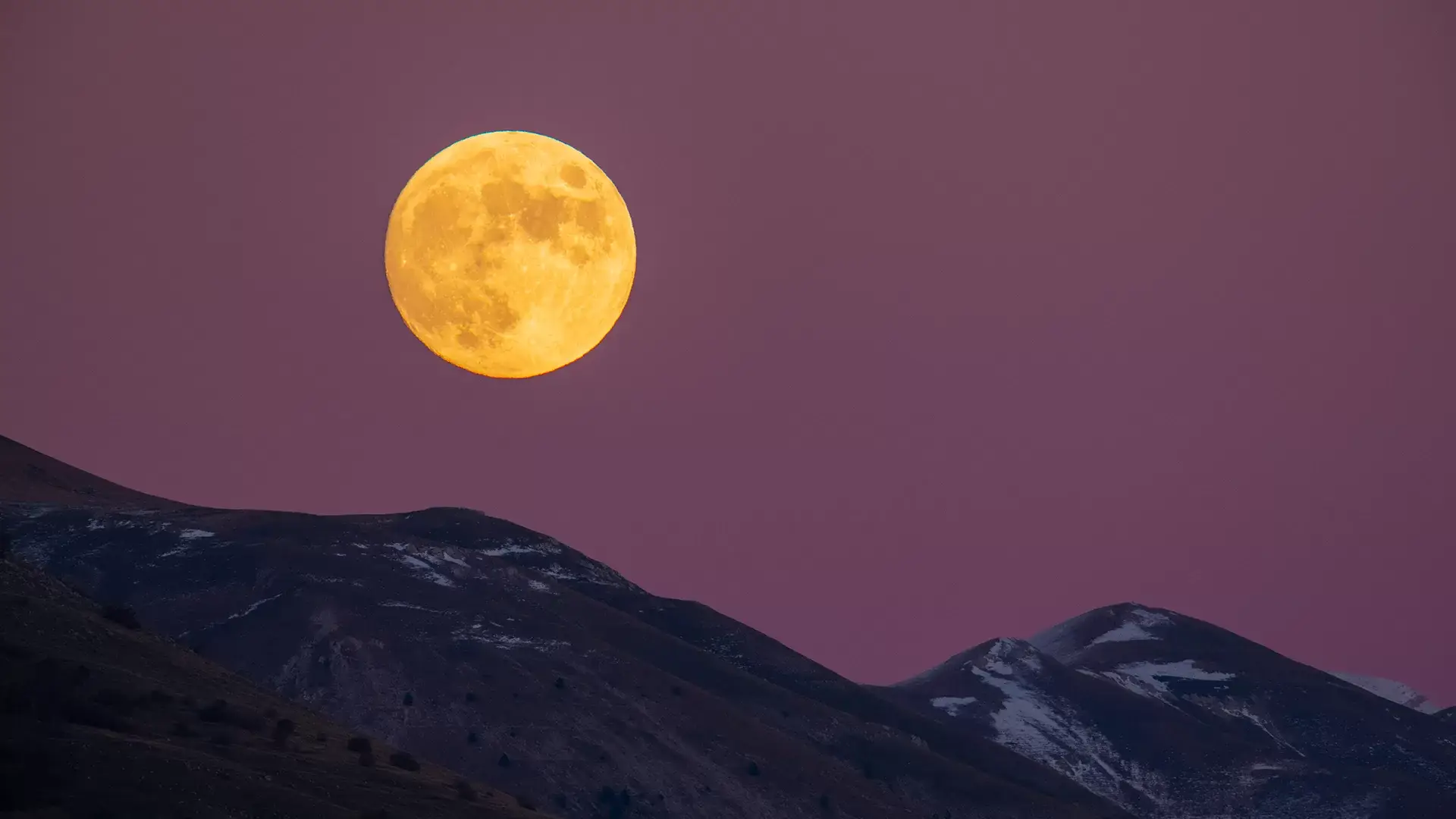
Every November, sky-watchers and nature enthusiasts alike turn their eyes upward to celebrate the full moon that heralds the closing of autumn and the coming of winter: the Beaver Moon. In 2025, this celestial event is especially noteworthy, and here’s everything you need to know — from its origins and meaning to how, when and where to best view it.
What is the Beaver Moon?
The term “Beaver Moon” is the traditional name for the full moon in November. According to the Merriam?Webster dictionary:
“the first full moon of November … the November full moon is known as the Beaver Moon. This was the time to set traps before the swamps froze to ensure a good supply of furs for the winter.” (Merriam-Webster)
In short, this moon has long been associated with nature’s transition toward winter: animals preparing for colder days, and humans making sure their shelters and supplies are ready.
2025 Highlights: A Supermoon for the Ages
The Beaver Moon in 2025 is not just any full moon—it’s set to be the largest and brightest full moon of the year, thanks to its timing. Key facts:
- It reaches peak fullness at about 8:19 a.m. ET on Wednesday, November 5. (The Weather Channel)
- At its closest approach (perigee), it’ll be roughly 221,817 miles (356,980 km) from Earth—making this the closest full moon of the year. (Jacksonville Journal-Courier)
- Because of that proximity, it falls under what astronomers call a “supermoon”—appearing up to ~14% larger and ~30% brighter than a typical full moon. (Live Science)
- The best nights to view will be the evenings of November 4 and 5, when the moon is still high and bright in the sky. (Theweather.com | Meteored)
So if you’re in the U.S. (or in North America in general), mark your calendar. Clear skies plus open horizon = stunning moonrise visuals.
Why It’s Called the Beaver Moon
The name has rich cultural and ecological roots. Some of the main reasons:
- For Indigenous peoples and early colonial communities in North America, November was the time when beavers were active in building lodges and preparing for winter. The full moon served as a natural calendar marker for that work. (Republic World)
- It was also the season when trappers would set beaver traps in the warming months before the waterways froze for the winter. (Merriam-Webster)
- Additionally, the moon has earned other names: the Frost Moon, Freezing Moon, depending on the tradition and culture. (The Exploreist)
Viewing Tips: How to Make the Most of It
Here are my top suggestions so you don’t miss out:
- Find a clear view to the east (or east-southeast) around moonrise; the lower the moon is on the horizon the larger and more dramatic it tends to appear (thanks to the “moon illusion”). (The Weather Channel)
- Minimize light pollution: get away from bright city lights if you can—it helps the moon’s glow stand out more.
- Check local moonrise times: although peak fullness is in the morning, the moon will be full and bright the evening before (Nov 4) and the night of (Nov 5). Use a moon calculator for your location. (Almanac)
- Bring a camera! Whether with your phone or a DSLR, the warm glow near the horizon and clear details of the lunar surface make for beautiful shots.
- Enjoy the experience: This isn’t just about looking at the moon—it’s about the time of year, the shift in seasons, and that connection to nature.
Symbolism & Meaning: What This Moon Can Inspire
Beyond the science, the Beaver Moon carries symbolic value, especially in 2025 when it’s so grand. Consider these themes:
- Preparation & grounding: Like the beaver constructing its lodge, this is an ideal time to ready yourself—emotionally, physically, spiritually—for the months ahead. (thepsychicline.com)
- Reflection & completion: The full moon often brings closure; you might use this time to reflect on what you’ve achieved this year and what needs to be wrapped up.
- Abundance & light: A bright full moon in the darker part of the year reminds us of light even as days shorten—there’s something uplifting in that contrast.
- Connection with nature: Observing this moon ties you to ancient rhythms—the cycles of animals, the shift of seasons, the passing of time.
Why This Year Is Extra Special
Because this Beaver Moon of November 2025 is both a supermoon and the closest full moon of the year, it offers a rare opportunity:
- We likely won’t get a full moon this close for a while, making this one stand out.
- Even if you’re not usually into stargazing or lunar events, the visual spectacle alone—large, bright moonrise in a crisp autumn sky—makes it worth stepping outside.
- It coincides with broader seasonal transitions—fall into winter—making the experience more atmospheric.
Final Thoughts
As the leaves fade and the chill of winter begins to whisper, the Beaver Moon rises as a luminous beacon of nature’s cycles. Whether you’re a photographer chasing golden hour moonshots, a nature-lover pondering the work of beavers and the passing of seasons, or simply someone who enjoys looking up at a clear night sky, this moon invites you to pause.
So set a reminder. Grab a jacket, step out after sunset on November 4 or 5. Face east, breathe deep, and let the bright, majestic full moon of the season wash over you.
? Clear skies and happy moon-gazing! If you like, I can also pull together a printable star-map for your region or tips for photographing the moon—would that be helpful?